In today’s competitive business landscape, maximizing revenue is more critical than ever. Enter AI-powered CRM analytics, a game-changing solution that transforms how companies understand and engage with their customers.
By leveraging sophisticated algorithms and machine learning, AI-driven CRM systems provide deep insights into customer behavior, preferences, and needs, enabling businesses to tailor their strategies for maximum impact. This technology not only enhances customer satisfaction and loyalty but also drives sales and marketing efficiency.
This article explores how companies can harness the power of AI-powered CRM analytics to optimize their revenue streams and stay ahead in the market.
Maximize Revenue with AI-Powered CRM Analytics
The integration of Artificial Intelligence (AI) into Customer Relationship Management (CRM) systems has revolutionized the way businesses can maximize revenue. By leveraging AI-powered analytics, companies can gain insightful data that helps in making data-driven decisions.
This not only enhances customer experience but also drives sales efficiency and operational effectiveness. With AI-driven CRM analytics, businesses can identify trends, predict customer behavior, and personalize marketing strategies, leading to increased customer retention and revenue growth.
Understanding AI-Powered CRM Analytics
AI-powered CRM analytics involve the use of advanced algorithms and machine learning models to analyze vast amounts of customer data. This process helps in identifying patterns and trends that might not be apparent through traditional methods.
By understanding these patterns, businesses can tailor their customer interactions and marketing campaigns more effectively, leading to higher conversion rates and customer satisfaction.
Key Benefits of AI-Powered CRM Analytics
One of the most significant benefits of AI-powered CRM analytics is the ability to predict customer behavior. This predictive capability allows businesses to anticipate customer needs and preferences, enabling them to offer personalized products and services.
Additionally, AI-driven analytics can help in segmenting customers based on their purchasing behavior, which can be used to create targeted marketing campaigns. This segmentation and personalization lead to higher engagement and sales.
Implementing AI-Powered CRM Analytics
To implement AI-powered CRM analytics, businesses need to ensure they have the right data infrastructure in place. This includes data collection mechanisms, data storage solutions, and data processing tools. Once the data is collected, AI models can be trained to analyze the data and provide insights.
It is also crucial to have a cross-functional team that can interpret the AI insights and translate them into actionable strategies. Continuous monitoring and optimization of the AI models are essential to ensure they remain accurate and effective over time.
| Key Feature | Benefit |
|---|---|
| Predictive Analytics | Anticipate customer needs and preferences, leading to personalized marketing |
| Data Segmentation | Create targeted marketing campaigns, improving engagement and sales |
| Real-Time Insights | Make immediate, data-driven decisions to enhance customer experience |
| Automated Reporting | Generate comprehensive reports with minimal effort, providing actionable insights |
How can AI be used in CRM?
Artificial Intelligence (AI) has revolutionized Customer Relationship Management (CRM) by enhancing various aspects of customer engagement, data analysis, and operational efficiency.
AI-driven CRM solutions can automate routine tasks, provide predictive insights, and personalize customer interactions, ultimately leading to improved customer satisfaction and business growth. Here are some key ways AI can be leveraged in CRM:
1. Automated Data Entry and Management: AI can automate the process of data entry and management, reducing human errors and freeing up time for more strategic tasks. AI algorithms can extract and organize data from various sources, such as emails, social media, and customer interactions, ensuring that the CRM system is always up-to-date.
2. Predictive Analytics: AI can analyze vast amounts of historical data to predict future customer behavior. This predictive analytics can help businesses anticipate customer needs, identify potential churn, and tailor marketing strategies to maximize customer retention and satisfaction.
3. Personalized Customer Interactions: AI-powered chatbots and virtual assistants can provide 24/7 customer support, answering queries and resolving issues in real-time. These tools can also personalize interactions by using customer data to offer personalized recommendations and solutions.
4. Sales Forecasting: AI can improve sales forecasting by analyzing past sales data and market trends. This helps businesses make data-driven decisions about inventory management, pricing, and promotional activities, leading to better financial outcomes.
5. Customer Segmentation: AI can segment customers based on various criteria, such as behavior, preferences, and purchase history. This segmentation allows businesses to target specific customer groups with tailored marketing campaigns, improving the effectiveness of their marketing efforts.
Enhancing Customer Support with AI
AI can significantly enhance customer support by providing efficient and personalized assistance. For instance, AI-powered chatbots can handle a wide range of customer inquiries, from simple FAQs to more complex issues.
These chatbots can use natural language processing (NLP) to understand customer needs and provide relevant solutions. Additionally, AI can route customer inquiries to the most appropriate agent, reducing wait times and improving customer satisfaction.
- 24/7 Availability: Chatbots can provide support around the clock, ensuring that customers receive assistance whenever they need it.
- Personalized Responses: AI can analyze customer data to offer personalized recommendations and solutions, making interactions more meaningful.
- Efficient Issue Resolution: By automating routine tasks, AI can free up human agents to focus on more complex issues, leading to faster and more effective resolution.
Improving Sales Performance with AI
AI can significantly boost sales performance by providing actionable insights and automating key sales processes. Predictive analytics can help sales teams identify the most promising leads and tailor their approaches to increase the likelihood of conversion. AI can also automate follow-ups and track customer interactions, ensuring that no lead is left unattended.
- Lead Scoring: AI can score leads based on their likelihood to convert, helping sales teams prioritize their efforts and focus on the most promising opportunities.
- Automated Follow-Ups: AI can automate follow-up emails and reminders, ensuring that leads are nurtured throughout the sales cycle.
- Data-Driven Insights: AI can provide real-time data and analytics, enabling sales teams to make informed decisions and adjust their strategies as needed.
Optimizing Marketing Efforts with AI
AI can optimize marketing efforts by enabling precise targeting and personalized marketing campaigns. AI algorithms can analyze customer data to identify patterns and trends, helping marketers create more effective campaigns. Additionally, AI can automate the process of A/B testing, allowing marketers to quickly determine the most effective marketing strategies.
- Customer Segmentation: AI can segment customers based on their behavior and preferences, enabling marketers to create targeted campaigns that resonate with specific groups.
- Personalized Marketing: AI can use customer data to deliver personalized content and offers, increasing engagement and conversion rates.
- Automated A/B Testing: AI can automate the process of A/B testing, allowing marketers to quickly identify the most effective marketing strategies and optimize their campaigns.
What is AI analytics CRM?
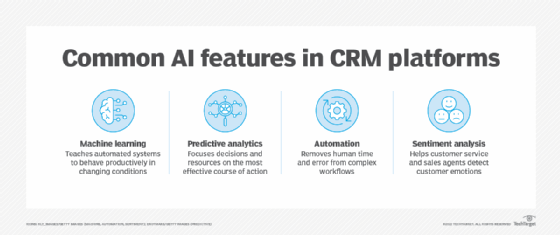
AI analytics CRM, or Artificial Intelligence Analytics Customer Relationship Management, is a sophisticated approach that integrates artificial intelligence and machine learning technologies into CRM systems to enhance customer interactions and business outcomes.
By leveraging AI, these systems can analyze vast amounts of customer data, identify patterns, and provide actionable insights to improve customer engagement, sales, and marketing strategies.
AI analytics CRM systems often include features such as predictive analytics, customer segmentation, personalized recommendations, and automated workflows, which help businesses make data-driven decisions and create more personalized customer experiences.
Key Features of AI Analytics CRM
AI analytics CRM systems are equipped with several advanced features that set them apart from traditional CRM solutions. These features include:
- Predictive Analytics: AI algorithms can predict customer behavior, such as churn risk, purchase likelihood, and lifetime value, allowing businesses to take proactive measures.
- Customer Segmentation: AI can segment customers based on behavior, preferences, and demographics, enabling more targeted and effective marketing campaigns.
- Personalized Recommendations: AI-driven systems can offer personalized product or service recommendations, enhancing the customer experience and increasing conversion rates.
Benefits of Implementing AI Analytics CRM
The implementation of AI analytics CRM can bring numerous benefits to businesses, enhancing various aspects of customer relationship management. These benefits include:
- Improved Customer Insights: AI analytics provide deep insights into customer behavior and preferences, helping businesses understand and anticipate customer needs more effectively.
- Enhanced Customer Engagement: Personalized interactions and tailored content can significantly improve customer engagement and satisfaction, leading to higher retention rates.
- Increased Operational Efficiency: Automated workflows and intelligent decision-making capabilities can streamline operations, reduce manual tasks, and optimize resource allocation.
Challenges and Considerations in AI Analytics CRM
While AI analytics CRM offers substantial benefits, there are also challenges and considerations that businesses must address. These include:
- Data Quality and Privacy: High-quality data is essential for accurate AI analytics, and businesses must ensure data privacy and compliance with regulatory standards.
- Integration and Implementation: Integrating AI analytics CRM into existing systems can be complex and may require significant investment in technology and training.
- Change Management: Implementing AI analytics CRM involves changes in business processes and employee behavior, requiring effective change management strategies to ensure smooth adoption.
Which CRM has the best AI?
When evaluating which CRM has the best AI, several factors come into play, including the sophistication of the AI algorithms, the range of features, integration capabilities, and user experience. One of the top contenders in this category is Salesforce, which has made significant strides in AI through its Salesforce Einstein platform.
Salesforce Einstein offers a wide array of AI-powered functionalities, such as predictive analytics, automated insights, and personalized customer interactions. Another strong player is HubSpot, which integrates AI to enhance marketing, sales, and service processes.
HubSpot’s AI capabilities include lead scoring, content recommendations, and predictive analytics. Lastly, Pardot, a CRM by Salesforce, also stands out with its AI-driven lead nurturing and scoring features, making it a robust choice for businesses looking to leverage AI in their customer relationship management.
Key Features of Salesforce Einstein
Salesforce Einstein is renowned for its advanced AI capabilities, which are designed to enhance various aspects of customer relationship management. Here are some of its key features:
- Predictive Analytics: Einstein’s predictive analytics help businesses forecast customer behavior, such as likelihood to purchase or churn, by analyzing historical data and patterns.
- Automated Insights: The platform provides automated insights into customer interactions, helping sales teams to identify the most promising leads and tailor their strategies accordingly.
- Personalized Customer Interactions: Einstein uses AI to create personalized experiences for customers, from targeted marketing campaigns to customized service interactions.
HubSpot’s AI-Driven Enhancements
HubSpot is another CRM that has integrated AI to offer a more dynamic and efficient customer management experience. Here are some of the AI features that set HubSpot apart:
- Lead Scoring: HubSpot’s AI algorithms analyze lead data to score prospects based on their likelihood to convert, enabling sales teams to prioritize their efforts.
- Content Recommendations: The platform uses AI to suggest relevant content to customers, improving engagement and driving conversions.
- Predictive Analytics: HubSpot’s predictive analytics help businesses make data-driven decisions by providing insights into customer behavior and market trends.
Pardot’s AI-Driven Lead Nurturing
Pardot, a CRM solution by Salesforce, focuses on AI-driven lead nurturing and scoring to optimize marketing and sales processes. Here are some of its notable AI features:
- Lead Nurturing: Pardot’s AI automates the process of nurturing leads through targeted emails and content, ensuring that each lead receives the right information at the right time.
- Lead Scoring: The platform uses AI to score leads based on their interactions and engagement, allowing sales teams to focus on the most qualified prospects.
- Email Optimization: Pardot’s AI optimizes email campaigns by analyzing recipient behavior, timing, and content preferences to improve open and conversion rates.
How can AI boost sales?
Artificial Intelligence (AI) can significantly enhance sales performance by streamlining processes, personalizing customer experiences, and providing actionable insights. Here’s how AI can boost sales:
1. Automated Lead Scoring and Prioritization: AI algorithms can analyze vast amounts of data to identify patterns and score leads based on their likelihood to convert. This helps sales teams focus their efforts on the most promising prospects, increasing the efficiency of their outreach and the probability of closing deals.
2. Predictive Analytics for Forecasting: AI-driven predictive analytics can forecast future sales trends by analyzing historical data, market conditions, and customer behaviors. This enables sales teams to make data-driven decisions, set realistic targets, and allocate resources more effectively.
3. Personalized Customer Interactions: AI can tailor marketing and sales communications to individual customer preferences and behaviors. By leveraging machine learning, companies can send personalized emails, product recommendations, and offers, leading to higher engagement and conversion rates.
Automating Sales Processes with AI
Automating sales processes can significantly reduce administrative burdens and free up sales teams to focus on high-value activities. Here’s how AI can automate sales processes:
1. Lead Generation and Qualification: AI can automate the process of finding and qualifying leads by scraping the web for relevant data, analyzing social media profiles, and monitoring online behavior.
2. Follow-Up and Nurturing: AI-powered chatbots and email automation can handle initial customer interactions, provide immediate responses, and nurture leads through the sales funnel.
3. Sales Pipeline Management: AI tools can track and manage the sales pipeline, providing real-time updates on the status of leads and deals, and alerting sales teams to potential bottlenecks.
Leveraging AI for Customer Insights
AI can provide deep insights into customer behavior and preferences, enabling sales teams to make more informed decisions. Here’s how AI can enhance customer insights:
1. Behavioral Analysis: AI can analyze customer interactions, purchase history, and digital footprints to understand buying patterns and preferences.
2. Sentiment Analysis: AI tools can gauge customer sentiment through social media, reviews, and feedback, helping sales teams to address issues and improve customer satisfaction.
3. Segmentation and Targeting: AI can segment customers into distinct groups based on shared characteristics, allowing for more targeted and effective marketing and sales strategies.
Enhancing Sales with AI-Driven Recommendations
AI can provide sales teams with actionable recommendations to improve sales performance and customer satisfaction. Here’s how AI can drive recommendations:
1. Product Recommendations: AI can suggest complementary or upsell products based on customer history and behavior, increasing the average order value.
2. Optimal Timing for Outreach: AI can determine the best times to reach out to leads and customers, based on their activity patterns and communication history.
3. Customized Sales Strategies: AI can generate personalized sales strategies for each customer segment, ensuring that sales efforts are tailored to the unique needs and preferences of different groups.
Frequently Asked Questions
What is AI-Powered CRM Analytics?
AI-Powered CRM Analytics leverages artificial intelligence to analyze customer data, predict behaviors, and optimize sales strategies. This technology provides deeper insights into customer interactions, enabling businesses to make data-driven decisions that enhance customer satisfaction and boost revenue.
How does AI-Powered CRM Analytics help in maximizing revenue?
AI-Powered CRM Analytics identifies high-value customer segments, predicts buying patterns, and personalizes marketing efforts. By automating routine tasks and providing actionable insights, it allows sales teams to focus on high-impact activities, leading to increased efficiency and higher revenue generation.
Can AI-Powered CRM Analytics integrate with existing CRM systems?
Yes, AI-Powered CRM Analytics can seamlessly integrate with most existing CRM systems. This integration enhances the visibility and usability of customer data, providing a unified platform for managing customer interactions, improving sales processes, and driving better outcomes.
What are the key benefits of using AI-Powered CRM Analytics?
The key benefits include improved customer segmentation, enhanced predictive analytics, streamlined sales processes, and personalized customer experiences. These capabilities lead to higher conversion rates, increased customer retention, and ultimately, higher revenue for businesses.