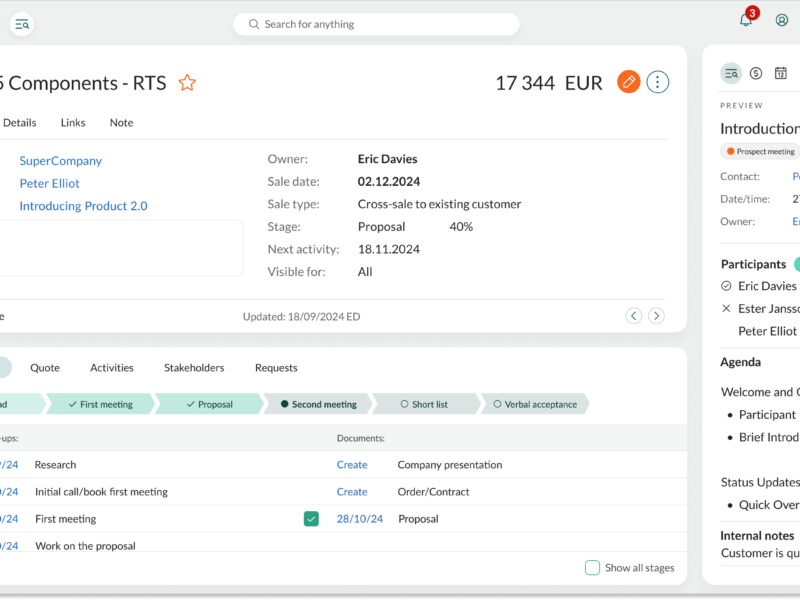
In today’s competitive business landscape, efficiently tracking every lead is no longer a luxury but a necessity. Leads are the lifeblood of any growing enterprise, and converting them into loyal customers can make or break your success.
With a myriad of digital tools and strategies at your disposal, the challenge lies in leveraging these resources to streamline your sales process and maximize conversions.
This article delves into the importance of lead tracking, offering actionable insights and practical steps to help you convert more customers and drive sustainable growth. Discover how to transform potential clients into satisfied buyers with precision and consistency.
Mastering Lead Tracking: Enhance Customer Conversion Rates
In today’s competitive market, tracking every lead is crucial for converting more customers. By implementing a robust lead tracking system, businesses can gain valuable insights into customer behavior, preferences, and pain points.
This data-driven approach enables companies to tailor their marketing strategies, improve customer service, and ultimately, increase conversion rates. Effective lead tracking involves capturing lead information from multiple sources, monitoring lead activities, and using analytics to identify high-potential leads.
This comprehensive approach not only helps in nurturing leads through the sales funnel but also enhances customer satisfaction and loyalty.
Understanding the Importance of Lead Tracking
Lead tracking is essential because it provides a 360-degree view of each potential customer. This comprehensive understanding allows businesses to personalize their interactions, addressing the specific needs and interests of each lead.
By tracking leads from initial contact through to conversion, companies can identify which marketing channels are most effective, which messages resonate best, and how to optimize the customer journey. This granular level of insight is invaluable for making data-driven decisions that drive growth and improve customer acquisition rates.
Implementing an Effective Lead Tracking System
To implement an effective lead tracking system, businesses need to leverage customer relationship management (CRM) software. These tools automate the process of capturing and managing lead information, streamlining workflows, and providing real-time analytics.
Key features to look for in a CRM include lead scoring, email tracking, and automated follow-up sequences. By integrating these functionalities, businesses can ensure that no lead is left behind and that each potential customer receives the attention they deserve.
This holistic approach to lead management is crucial for maximizing conversion rates and achieving business objectives.
Optimizing Lead Conversion Strategies
Once you have a reliable lead tracking system in place, the next step is to optimize your lead conversion strategies. This involves creating personalized marketing campaigns that address the unique needs and preferences of your leads.
Utilizing the data collected from lead tracking, businesses can segment their leads based on various criteria such as demographics, behavior, and engagement levels. Tailored content, offers, and communication can then be designed to resonate with each segment, increasing the likelihood of conversion.
Regularly analyzing and refining these strategies based on performance metrics ensures continuous improvement and sustainable growth.
| Key Aspect | Description |
|---|---|
| Lead Tracking | Capturing and monitoring lead information from multiple sources to gain insights and improve customer interactions. |
| CRM Software | Tools that automate lead management, provide real-time analytics, and help in nurturing leads through the sales funnel. |
| Lead Conversion Strategies | Personalized marketing campaigns and tailored communication to enhance lead engagement and increase conversion rates. |
How do you track lead conversion?

Tracking lead conversion involves several steps and tools that help you understand the effectiveness of your marketing and sales efforts. To effectively track lead conversion, you need to set up a comprehensive system that captures data at every stage of the customer journey.
Here are the key steps:
1. Define conversion goals: Clearly define what constitutes a lead conversion (e.g., a sale, a signup, a consultation request).
2. Implement tracking tools: Use tools like CRM (Customer Relationship Management) systems, Google Analytics, and marketing automation platforms to capture and analyze data.
3. Set up conversion tracking: Configure specific tracking codes (e.g., Google Analytics conversion tracking, Facebook Pixel) on your website and landing pages.
4. Monitor key metrics: Regularly review metrics such as conversion rates, cost per conversion, and ROI to assess performance.
5. Optimize your process: Use the insights gained from tracking to refine your marketing strategies and improve conversion rates.
Setting Up Conversion Tracking in Google Analytics
To set up conversion tracking in Google Analytics, follow these steps:
1. Create a Google Analytics account if you do not already have one.
2. Navigate to the Admin section and select the property where you want to add conversion tracking.
3. Under the Property column, click on Goals and then New Goal.
4. Choose a goal template or create a custom goal based on the action you want to track.
5. Set up the goal details, such as the destination URL or event parameters.
6. Save the goal and verify that it is tracking correctly by testing the conversion.
Using CRM Systems for Lead Conversion Tracking
CRM systems are essential for tracking lead conversion throughout the sales process:
1. Input lead data: Capture lead information from various sources (e.g., website forms, email campaigns, social media) into your CRM.
2. Segment leads: Categorize leads based on attributes such as demographics, behavior, and engagement levels.
3. Track interactions: Record all interactions with leads, including emails, calls, and meetings.
4. Monitor pipeline stages: Track the progress of leads through different stages of the sales funnel.
5. Generate reports: Use built-in reporting tools to analyze conversion rates and identify areas for improvement.
Optimizing Lead Conversion with A/B Testing
A/B testing is a powerful method to optimize lead conversion rates:
1. Identify variables: Determine which elements of your landing pages, email campaigns, or ads you want to test (e.g., headlines, images, calls to action).
2. Create variations: Develop different versions of the element you want to test.
3. Randomize distribution: Ensure that each variation is shown to a statistically significant number of visitors.
4. Analyze results: Use analytics tools to compare the performance of each variation in terms of conversion rates.
5. Implement the best version: Apply the winning variation to your marketing materials and continue testing other elements to further optimize conversion rates.
How do you calculate lead to customer conversion rate?
To calculate the lead to customer conversion rate, you need to follow these steps:
1. Identify the Total Number of Leads: This is the total number of potential customers who have shown interest in your product or service through various means such as website visits, email sign-ups, or inquiries.
2. Determine the Number of Converted Customers: This is the number of leads who have completed a desired action, such as making a purchase, subscribing to a service, or signing a contract.
3. Calculate the Conversion Rate: Use the following formula to calculate the conversion rate:
[
text{Lead to Customer Conversion Rate} = left( frac{text{Number of Converted Customers}}{text{Total Number of Leads}} right) times 100
]
Understanding the Importance of Lead to Customer Conversion Rate
The lead to customer conversion rate is a crucial metric for businesses as it helps them understand the effectiveness of their marketing and sales efforts.
A higher conversion rate indicates that a larger percentage of leads are becoming customers, which can be a sign of strong marketing strategies and effective sales processes.
– Evaluating Marketing Efforts: It helps in assessing the quality and effectiveness of lead generation activities.
– Optimizing Sales Funnel: It provides insights into where leads are dropping off in the sales funnel, allowing for targeted improvements.
– ROI Analysis: It aids in calculating the return on investment (ROI) for marketing and sales expenditures.
Factors Affecting Lead to Customer Conversion Rate
Several factors can influence the lead to customer conversion rate, and understanding these can help in improving the rate over time.
– Lead Quality: High-quality leads are more likely to convert into customers. This can be improved by refining targeting criteria and lead scoring.
– Sales Process: The efficiency and effectiveness of the sales process play a significant role. Streamlining and personalizing the sales approach can enhance conversion rates.
– Customer Experience: Positive customer experiences, including user-friendly websites, responsive customer service, and engaging content, can significantly boost conversion rates.
Strategies to Improve Lead to Customer Conversion Rate
Improving the lead to customer conversion rate involves a combination of strategic and tactical efforts aimed at optimizing various stages of the customer journey.
– Enhance Lead Qualification: Implement more rigorous lead qualification criteria to ensure that only the most promising leads enter the sales funnel.
– Personalize Marketing and Sales Efforts: Use data and analytics to tailor marketing and sales messages to individual leads, making them more relevant and compelling.
– Optimize the Sales Funnel: Regularly review and refine the sales funnel to identify and address bottlenecks, ensuring a smooth and efficient conversion process.
What does convert leads into customers mean?
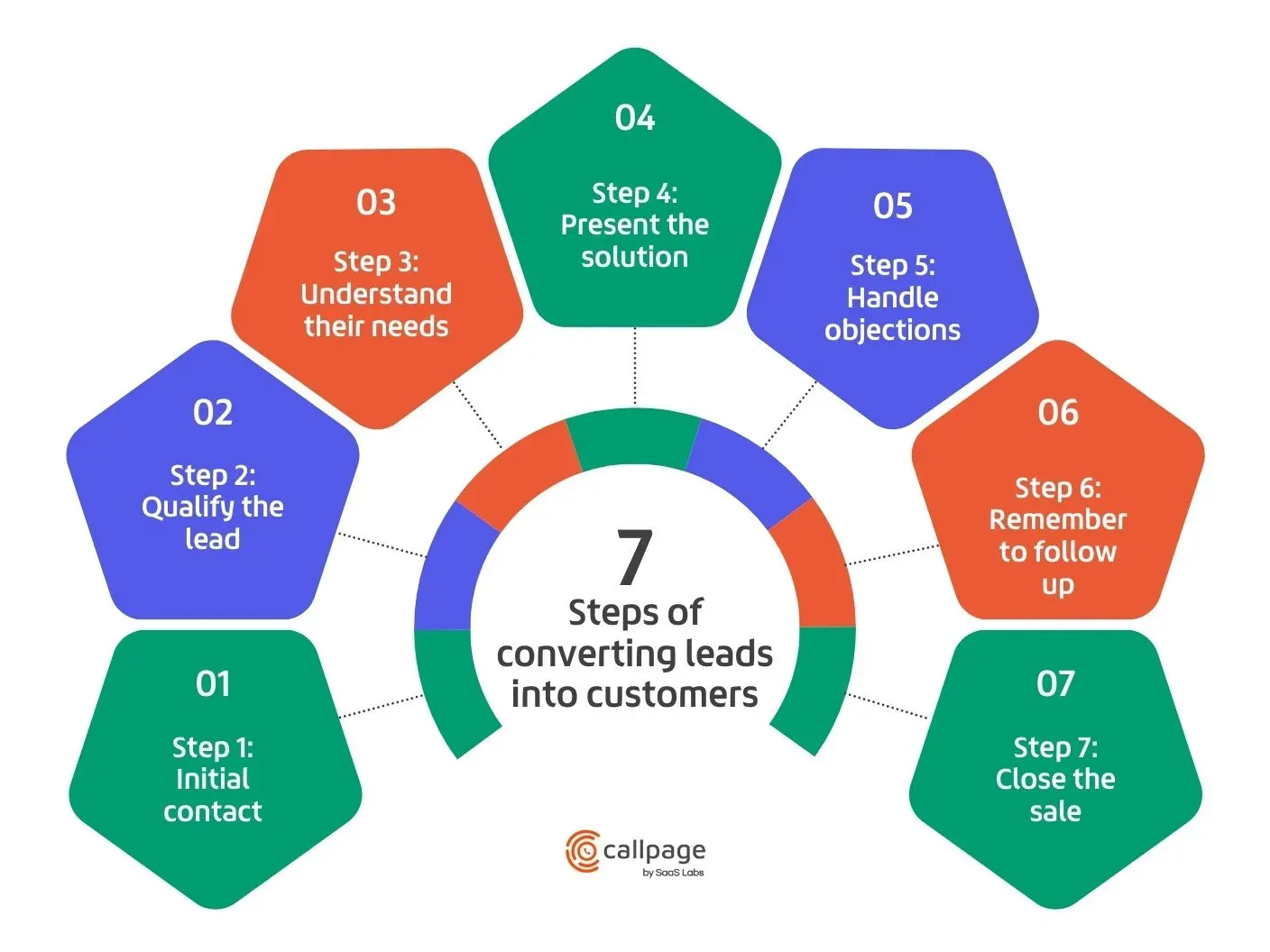
Converting leads into customers is a fundamental concept in sales and marketing, referring to the process of transforming potential customers (leads) into actual paying customers. This conversion involves guiding leads through various stages of the sales funnel, from initial contact to the final purchase.
The goal is to nurture relationships, build trust, and provide value, ultimately encouraging leads to make a buying decision. Successful lead conversion often requires a combination of effective marketing strategies, personalized communication, and exceptional customer service.
Understanding the Lead Conversion Funnel
The lead conversion funnel is a visual representation of the stages a lead goes through before becoming a customer. Each stage is crucial and requires specific strategies to move the lead forward. The typical stages are:
- Awareness: At this stage, leads become aware of your brand or product through various marketing efforts such as social media, content marketing, and advertising.
- Interest: Once aware, leads show interest by engaging with your content, signing up for newsletters, or visiting your website. It’s important to provide valuable information and address their needs and concerns.
- Consideration: In this stage, leads are actively considering your product or service. They may compare your offerings with competitors, read reviews, and ask for more detailed information. Providing case studies, testimonials, and free trials can help build trust.
- Decision: This is the final stage, where leads make the decision to purchase. Streamlining the buying process, offering incentives, and providing excellent customer support can encourage leads to convert.
Strategies for Converting Leads into Customers
Effective strategies can significantly enhance the lead conversion rate. Here are some key approaches:
- Personalization: Tailor your marketing and communication to each lead based on their interests and behaviors. Use data analytics to understand their preferences and deliver personalized content and offers.
- Engaging Content: Create valuable and relevant content that addresses the lead’s pain points and provides solutions. This can include blog posts, videos, infographics, and webinars.
- Follow-Up: Regular follow-up is crucial to keep leads engaged. Use automated email campaigns, phone calls, and social media interactions to stay in touch and provide ongoing value.
Measuring the Success of Lead Conversion
To ensure your lead conversion efforts are successful, it’s essential to measure and analyze key metrics. Here are some important metrics to track:
- Lead Conversion Rate: This metric measures the percentage of leads that convert into customers. It helps you understand the effectiveness of your conversion strategies.
- Customer Acquisition Cost (CAC): CAC is the cost associated with converting a lead into a customer. Lowering this cost can improve profitability.
- Return on Investment (ROI): ROI measures the financial return on your lead generation and conversion efforts. It helps you evaluate the overall effectiveness of your marketing and sales activities.
Frequently Asked Questions
How does tracking every lead help in converting more customers?
Tracking every lead provides valuable insights into customer behavior and preferences. This data helps tailor your marketing efforts, improve customer engagement, and identify the most effective conversion strategies. By understanding the customer journey, you can optimize your sales process, enhance user experience, and ultimately increase the likelihood of converting leads into loyal customers.
What tools can I use to track leads effectively?
Several tools can help you track leads effectively, including CRM software like Salesforce, HubSpot, and Pardot. These tools offer features such as lead scoring, automated emails, and analytics to monitor lead activity. Additionally, Google Analytics and marketing automation platforms like Marketo can provide detailed insights into lead behavior, helping you refine your strategies and improve conversion rates.
How can I ensure I follow up with leads promptly?
To ensure prompt follow-up with leads, implement an automated system that sends immediate responses to new leads. Use CRM tools to set up alerts and reminders for your sales team. Regularly review and prioritize leads based on their engagement level and purchase intent. Effective communication and timely follow-ups can significantly increase the chances of converting leads into customers.
What metrics should I track to measure the success of my lead conversion efforts?
To measure the success of your lead conversion efforts, track key metrics such as lead-to-customer conversion rate, time to conversion, lead source effectiveness, and customer lifetime value. Additionally, monitor engagement metrics like website traffic, email open rates, and click-through rates. These metrics provide a comprehensive view of your lead generation and conversion processes, helping you identify areas for improvement and optimize your strategies.